SUBSCRIBE

Search This Blog

May 25, 2021

የተሻረው እና አዲሱ የኤክሳይዝ ታክስ አዋጅ ድንጋጌዎች ንጽጽር በተለይም

የተሻረው እና አዲሱ የኤክሳይዝ ታክስ አዋጅ ድንጋጌዎች ንጽጽር በተለይም  


መግቢያ

በሀገራችን የኤክሳይ
ዝ ታክስን በተመለከተ በሥራ ላይ የነበረው አዋጅ ቁጥር 307/2002 (እንደተሻሻለ) ተሽሮ በአዲስ የኤክሳይዝ አዋጅ ቁጥር 1186/2020 የተተካ ስለመሆኑ ይታወቃል፡፡ በመሆኑም ይህ ጽሁፍ ሁለቱ አዋጆች የኤክሳይዝ ታክስ የተጣለባቸው ዕቃዎችን፤ ታክሱን የመክፈል ግዴታን እና ታክሱ ስለሚሰላበት ስሌትን በተመለከተ ያስቀመጡትን ድንጋጌዎች ከጨው ምርት ጋር በተያያዘ በወፍ በረር ለማነጻጽር ነው፡፡


1. በተሻረው እና በአዲሱ የኤክሳይዝ ታክስ አዋጅ መሰረት ታክሱ የተጣለባቸው ዕቃዎች፤ ታክሱን የመክፈል ግዴታ እና ታክሱ የሚሰላበት ስሌት፤

1.1 የተሻረው የኤክሳይዝ ታክስ አዋጅ፤

በቀድሞ የኤክሳይዝ ታክስ አዋጅ ቁጥር 307/2002 (እንደተሻሻለ) አንቀጽ 4 መሰረት የኤክሳይዝ ታክስ የተጣለባቸው ዕቃዎች በአገር ውስጥ ሲመረቱ (When produced locally) ወይም ከውጭ ወደሀገር ውስጥ ሲገቡ (When imported) የኤክሳይዝ ታክስ እንደሚከፈልባቸው የሚደነግግ ሲሆን፤ ታክሱን የመክፈል ግዴታ በተመለከተ በአዋጁ አንቀጽ 6 መሰረት በአገር ውስጥ በሚመረቱ ዕቃዎች ላይ የኤክሳይዝ ታክስ የመክፈል ግዴታ የተጣለው በአምራቹ (by the Producer) ላይ ሲሆን ወደ አገር ውስጥ በገቡ ዕቃዎች ላይ ደግሞ የመክፈል ግዴታ የተጣለው በአስመጭው (by the importer) ነው፡፡

በተሻረው የኤክሳይዝ ታክስ አዋጅ የቃል ትርጉም ላይ ለአምራች የተሰጠው ትርጉም ባይኖርም ከአዋጁ ጠቅላላ ድንጋጌ አምራች ማለት የኤክሳይዝ ታክስ የተጣለባቸውን ዕቃዎችን የሚያመርት/Producer/ እንጂ፤ የሚፈበርክ/Manufacturer/ ማለት እንዳልሆነ በቀላሉ መረዳት ይቻላል፡፡ ይሁን እንጂ Producer ተብሎ በተሻረው አዋጅ ለተጠቀሰውም ሆነ Manufacturer ተብሎ በአዲሱ የኤክሳይዝ ታክስ አዋጅ ላይ ለተጠቀሰው የኢንግሊዘኛ ቃል የተሰጠው የአማረኛ አቻ ትርጉም አምራች ቢሆንም Producer and Manufacturer የተለያዩ ትርጉም ያለቸው ቃላቶች ናቸው፡፡ በንግድ ምዝገባና ፈቃድ አዋጅ ቁጥር 980/2016 አንቀጽ 2 ንዑስ አንቀጽ 14 መሰረት “Manufacturing” includes any formulation, alteration, assembling or processing…or operation activity carried out by using industry ማለት ነው፡፡

ይህ የቃል ትርጉም በአዋጁ አንቀጽ 2 ንዑስ አንቀጽ 13 ለኢንዱስትሪ ከተሰጠው ትርጉም ጣምራ ንባብ መደራት የሚቻለው Manufacturing ማለት ኢንዱስትሪን በመጠቀም በሞተር ኃይል የመቀመም፤ የመለወጥ፤ የመገጣጠም፤ የማሰናዳት ወይም የማምረት ሥራን ማከናወን ማለት ነው፡፡  ለዚህም ጥሩ ማሳያ የሚሆነው በተሻረው አዋጅ መሰረት በጨው ላይ 30% የኤክሳይዝ ታክስ የተጣለው በአምራቹ (Producer) በመሆኑ በጨው መሸጫና መግዥ የዋጋ ግንባታ ላይ 30% የኤክሳይዝ ታክስ የተካተተው በጥሬ ጨው አምራች ገበሬዎች የመሸጫ ዋጋ ብር 257.95 ላይ እንጂ፤ ኢንዱስትሪን በመጠቀም ጥሬ-ጨው በማሰናዳትና በማቀነባበር /Processing/ ለምግብ ወይም ለሌላ ጥቅም በሚፈበርኩ /Manufacturer/ ፋብሪካዎች የመሸጫ ዋጋ ብር 529.68 ላይ የኤክሳይዝ ታክስ አልተካተተም፡፡  


በተሻረው አዋጅ አንቀጽ 5 መሰረት በአገር ውስጥ ለተመረቱ ዕቃዎች የኤክሳይዝ ታክስ ስሌት የሚሰላው ከማምረቻ ወጪ (cost of production) ዋጋ ላይ ሲሆን፤ በአዋጅ አንቀጽ 2(8) መሰረት የማምረቻ ወጪ ማለት፡-ለምርት ተግባር በቀጥታ የሚውሉ ጥሬ ዕቃዎችና የጉልበት ዋጋ፤ ቀጥተኛ ያልሆኑ ግብዓቶች ወጪ እና ኦቨር ሄድ ወጪ ያካትታል፡፡ ለምሳሌ የቀድሞ የንግድ ሚኒስቴር ህዳር/2009 ዓ.ም የጥሬ ጨው አምራቾች በማምረቻ ቦታ እና በፋብሪካ የተቀነባበረ አዮዲን ያለው ጨው እስከ ተጠቃሚው ድረስ የዋጋ ግንባታ እና የገበያ ሰንሰለት በሚል በማወጣውና ተግባራዊ በመሆን በሚገኘው ሰነድ ውስጥ በተራ ቁጥር 12 ላይ አንድ ኩንታል ጥሬ ጨው ለማምረት የተያዘው የማምረቻ ወጪ ብር 95.12 ነው፡፡ ይህ ማለት በተሻረው አዋጅ ጨው 30% የኤክሳይዝ ታክስ የሚከፈልበት ዕቃ/ምርት/ በመሆኑ የጨው አምራች የሆነ ገበሬ ኤክሳይዝ ታክስ የመክፈል ግዴታ ያለበት ሲሆን፤  ይህ አምራች ገበሬ የኤክሳይዝ ታክሱን የሚከፍለው ለማምረቻ ወጪ ተብሎ ከተያዘው ብር 95.12 በመሆኑ በኩንታል ሊከፍል የሚገደደው 30% × 95.12 = ብር 28.54 ነው፡፡

ማስታወሻ

የተሻረው የኤክሳይዝ ታክስ አዋጅ የኤክሳይዝ ታክስ ስሌት እንዲሰላ ግዴታ ሲጥል የነበረው ከማምረቻ ወጪ (cost of production) ዋጋ በመሆኑ፤ የቀድሞ የኢፌዴሪ ንግድ ሚኒስቴር ህዳር 30 ቀን 2009 ዓ.ም በደብዳቤ ቁጥር 011.36/7879 የጥሬ ጨው አምራቾች በማምረቻ ቦታ እና በፋብሪካ የተቀነባበረ አዮዲን ያለው ጨው እስከ ተጠቃሚው ድረስ የመግዥና መሸጫ ዋጋ እና የገበያ ሰንሰለት ተግባራዊ እንዲሆን ባስተላለፈው ሰርኩላር ደብዳቤ ላይ 30% የኤክሳይዝ ታክስ ተካቶ የሚገኘው በጥሬ ጨው አምራቾች የመሸጫ ዋጋ ብር 257.95 ላይ እንጂ በፋብሪካ የመሸጫ ዋጋ ብር 529.68 ላይ የኤክሳይዝ ታክስ አልተካተተም፡፡


2. አዲሱ የኤክሳይዝ ታክስ አዋጅ፤


በሌላ በኩል በአዲሱ የኤክሳይዝ ታክስ አዋጅ ቁጥር 1186/2020 አንቀጽ 5 መሰረት የኤክሳይዝ ታክስ የተጣለው በ3 ጉዳዮች ላይ ነው፡፡ ይህም፡- a) በተፈቀደለት አምራች በኢትዮጵያ ውስጥ በሚመረቱ ዕቃዎች (Manufactured in Ethiopia by a licensed manufacturer); b) ወደ ኢትዮጵያ በሚገቡ የኤክሳይዝ ታክስ የተጣለባቸው ዕቃዎች; እና c) በተፈቀደለት አገልግሎት ሰጪ በኢትዮጵያ ውስጥ የሚሰጡ የአክሳይዝ ታክስ የተጣለባቸው አገልግሎቶች ናቸው፡፡

በአዲሱ አዋጅ አንቀጽ 6 መሰረት የኤክሳይዝ ታክስ የመክፈል ግዴታ የተጣለው ከላይ ከa እስከ c በተጠቀሰው ቅደም ተከተል መሰረት የተፈቀደለት አምራች (Licensed manufacturer) አስመጪው እና አገልግሎቱን ለመስጠት የተመዘገበው ሰው ናቸው፡፡ የኤክሳይዝ ታክስ የመክፈል ግዴታ ከተጣለባቸው 3 አካላት መካከል ጸሃፊው በተፈቀደለት አምራች ላይ ብቻ ትኩረት አድርጓል፡፡

በአዋጅ አንቀጽ 2(20) መሰረት የተፈቀደለት አምራች (Licensed manufacturer) ማለት የኤክሳይዝ ታክስ የተጣለባቸው ዕቃዎችን የሚያመርት በአዋጁ አንቀጽ 17 መሰረት ፈቃድ የተሰጠው ሰው ማለት ነው፡፡ በአዋጁ በአንቀጽ 18(2) መሰረት የኤክሳይዝ ታክስ የሚከፈልባቸውን ዕቃዎች ለሚያመርት ሰው የሚሰጥ ፈቃድ የሚከተሉትን መያዝ አለበት፡-

  1. አምራቹ አንዲያመርት የተፈቀደለት ዕቃ ምድብ እና
  2. አምራቹ ምርቶችን እንዲያመርት የተፈቀደለትን ፋብሪካ ናቸው፡፡

በአዋጁ አንቀጽ 18/3ና4/ መሰረት ፈቃድ የተሰጠው አምራች፡ በተሰጠው ፈቃድ የተመለከተው ፋብሪካ ማምረት የሚችለው በፈቃዱ የተመለከተውን ዕቃ ምድብ ብቻ እንደሆነ እና በተሰጠው ፈቃድ የተመለከተው ፋብሪካ ማምረት የሚችለው በፈቃዱ ላይ አምራች በሚል የተመለከተው ሰው ብቻ እንደሆነ ይደነግጋል፡፡

በፈቃድ የተመለከተ ዕቃ ምድብ ማለት የኢፌዴሪ ንግድ ሚኒስቴር በ2012 ዓ.ም ባሳተመው የኢትዮጵያ ንግድ ሥራ ፈቃድ መስጫ መደቦች መመሪያ መሰረት በንግድ ሥራ ፈቃድ መስጫ ላይ የተመለከተ የሥራ መደብ ማለት ነው፡፡ ለምሳሌ አንድ አምራች በፈቃዱ ላይ የተመለከተው ዕቃ ምደብ የምግብ ጨው ማምረት ከሆነ ይህ ባለፈቃድ በፋብሪካው ማምረት የሚችለው የምግብ ጨው ብቻ ሲሆን ባለፈቃዱ በፈቃዱ ላይ አምራች መባል አለበት፡፡ በሌላ አገላለጽ አምራች ተብሎ ባልተገለጸ ፈቃድ እና በፈቃዱ ላይ ያልተገለጸን ዕቃ ምድብ ማምረት ክልክል ነው፡፡

በአዲሱ አዋጅ አንቀጽ 2(20) መሰረት ፋብሪካ/Factory/:- ማለት ፈቃድ የተሰጠው አምራች የኤክሳይዝ ታክስ የተጣለባቸውን ዕቃዎች የሚያመርትበት ወይም የሚያከማችበት ሥፍራ ሲሆን፤ የኤክሳይዝ ታክስ የተጣለባቸውን ዕቃዎች ለተጠቃሚው ህብረተሰብ ለገበያ የሚቀርቡበትን ማናቸውንም የአምራቹን የሥራ ቦታ አይጨምርም፡፡ ይህ ማለት ባለፈቃዱ ያመረታቸውን ዕቃዎች ለምሳሌ የምግብ ጨው በተለያዩ የአገሪቱ ክፍል መጋዘን ወይም ሱቅ በማከማቸት ለተጠቃሚዎች የሚያቀርብበት ቦታ እንደ ፋብሪካ ሊቆጠር አይችልም፡፡ 

በመሆኑም በጸሃፊው እምነት በተሻረው አዋጅ መሰረት በአገር ውስጥ በሚመረቱ ዕቃዎች ላይ የኤክሳይዝ ታክሱ የተጣለው በአምራቹ (Producer) በመሆኑ በጨው መሸጫና መግዥ የዋጋ ግንባታ ላይ 30% የኤክሳይዝ ታክስ የተካተተው በጥሬ ጨው አምራች ገበሬዎች የመሸጫ ዋጋ ብር 257.95 ላይ በመሆኑ፤ በተመሳሳይ በአዲሱ አዋጅ በኢትዮጵያ ውስጥ በሚመረቱ ዕቃዎች መካከል በጨው ላይ 25% የኤክሳይዝ ታክስ የመክፈል ግዴታ የተጣለው በተፈቀደለት አምራች (Licensed manufacturer) በመሆኑ ታክሱ የሚመለከተው አምራች ፋብሪካዎችን እንጂ፤ ጨው አምራች (Producer) ገበሬዎችን  አይመለከትም፡፡

ከላይ እንደተመለከተው በተሻረው አዋጅ አንቀጽ 6 መሰረት በአገር ውስጥ በሚመረቱ ዕቃዎች ላይ የኤክሳይዝ ታክስ የመክፈል ግዴታ የተጣለው በአምራቹ (by the Producer) በመሆኑ እና በአዋጁ አንቀጽ 5 መሰረት አምራቹ የሚከፍለው የኤክሳይዝ ታክስ ስሌት የሚሰላው ከማምረቻ ወጪ (cost of production) ዋጋ ላይ በመሆኑ፤ 30% የኤክሳይዝ ታክስ ተካቶ የሚገኘው በአምራች ገበሬዎች የመሸጫ ዋጋ ብር 257.95 ላይ እንጂ በፋብሪካ የመሸጫ ዋጋ ብር 529.68 ላይ የኤክሳይዝ ታክስ አልተካተተም፡፡

3. ማጠቃለያ

የቀደም የኤክሳይዝ ታክስ አዋጅ በአዲስ አንዲተካ ከተደረገበት ምክንያቶች መካከል በዋናነት በአዋጅ ቁጥር 1186/2020 መግቢያ/Preamble/ ላይ በግልጽ እንደተመለከተው በማምረቻ ወጪ ላይ ሲሰላ የነበረውን የኤክሳይዝ ታክስ፤ በፋብሪካ የመሸጫ ዋጋ እንዲተካ ለማድረግ በማሰብ ነው፡፡ በመሆኑ በጸሃፊው እምነት አዲሱ አዋጅ ሲሰራበት የቆየውን የኤክሳይዝ ታክስ ስሌት ከማምረቻ ወጪ ወደ ፋብሪካ የመሸጫ ዋጋ እንዲተካ ያደረገ በመሆኑ በጨው ላይ የተጣለውን 25% የኤክሳይዝ ታክስ ክፍያ መካተት ያለበት በፋብሪካ የመሸጫ ዋጋ ብር 529.68 እንጂ፤ በጨው አምራች ገበሬዎች የመሸጫ ዋጋ ላይ ባለመሆኑ፤ ቀደም ሲል በጨው አምራች ገበሬዎች የመሸጫ ዋጋ ላይ ብር 257.95 ተካቶ የነበረው የኤክሳይዝ ታክስ በአዲሱ አዋጅ ተነስቷል፡፡  

Mar 2, 2021

TYPES OF GOVERNMENT

 Types of Government


Louis XIV, the King of France from 1643 until 1715, is the definition of an absolute monarch. His famous phrase, "I am the State," is an illustration of the power he wielded in France. Louis ruled through a mixture of fear and admiration, but in every case the law extended from himself.

"Off with his head!"
This is a favorite story line to show how cruel a king (or a sultan or emperor) can be. The rules in this type of government are pretty clear. Whatever the ruler says, goes. Of course, many people have had different ideas about how the ruler should govern, and those beliefs support totally different types of government. The rules shape the government's LEGITIMACY, or the degree to which the people accept the authority of the government.

Rule by Man

Countries whose CITIZENS are governed by the absolute decisions of the ruler have not necessarily been unhappy. A government whose king or queen rules justly and wisely may enjoy a great deal of legitimacy as long as the ruler's AUTHORITY is accepted. Sometimes people may accept their leader because they are afraid of the consequences if they don't. In the words of MACHIAVELLI, "It is better to be feared than loved." As long as the feared ruler is seen as bringing about prosperity or protecting the lives of his subjects, it is entirely possible that his people will be happy.


Niccolo Machiavelli wrote political works during the Renaissance. In The Prince, Machiavelli advised his audience that in a system of Rule by Man it was "better to be feared than loved."

An absolute ruler may be accepted because the people believe or accept the idea that God gave him/her the right to rule. This belief is known as divine right, which often has been associated with a MONARCHY, a form of government in which the power of the king or queen is hereditary. A similar idea legitimized the Chinese emperor, whose rule was threatened if his subjects perceived that he had lost the "mandate of heaven."
Rule by man can also take the shape of an OLIGARCHY, or rule by a few elites whose right to rule is based on possession of wealth, social status, military position or achievement. A little more broadly based rule is by ARISTOCRACY (literally, "rule of the highest"), but if the type of government is "rule by man", their decisions are still ARBITARY and absolute.


Rule by Law

RULE BY LAW exists in any political system in which those with power cannot make up all their own rules, but must follow an established CODE OF LAW. In ancient times a Byzantine emperor established JUSTINIAN'S CODE, a set of laws named after him that lived on long after he died. We still follow parts of that code today. The Romans were also known for codifying laws, as was NAPOLEON, Emperor of France, many centuries later.


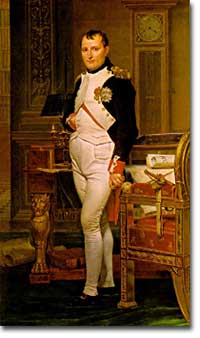
Napoleon revised the French laws into a single unified code, known as the Code Napoleon. Under the French Empire, the code was implemented throughout Europe. Napoleon is seen in this painting standing next to a copy of the Code written on a scroll.

Today most governments at least claim to be ruled by law. The most common indication is the existence of a written constitution, but the most important question to ask is whether or not the constitution actually is the "blueprint" that determines how and what policies are made. For example, Nigeria officially is a democracy with a written constitution that one dictator after another has ignored. On the other hand, Great Britain has never had a constitution as a single written document, but has for centuries been governed by law. For much of their history, the English had a limited monarchy, or a king or queen who has followed rule of law.
So whether a king can order "off with his head!" depends on the type of government that is accepted in his country. If he sets the rules (rule by man), or if the accepted outside rules allow (rule by law), the victim doesn't have a chance.


Types of government

 Types of Government


Louis XIV, the King of France from 1643 until 1715, is the definition of an absolute monarch. His famous phrase, "I am the State," is an illustration of the power he wielded in France. Louis ruled through a mixture of fear and admiration, but in every case the law extended from himself.

"Off with his head!"
This is a favorite story line to show how cruel a king (or a sultan or emperor) can be. The rules in this type of government are pretty clear. Whatever the ruler says, goes. Of course, many people have had different ideas about how the ruler should govern, and those beliefs support totally different types of government. The rules shape the government's LEGITIMACY, or the degree to which the people accept the authority of the government.

Rule by Man

Countries whose CITIZENS are governed by the absolute decisions of the ruler have not necessarily been unhappy. A government whose king or queen rules justly and wisely may enjoy a great deal of legitimacy as long as the ruler's AUTHORITY is accepted. Sometimes people may accept their leader because they are afraid of the consequences if they don't. In the words of MACHIAVELLI, "It is better to be feared than loved." As long as the feared ruler is seen as bringing about prosperity or protecting the lives of his subjects, it is entirely possible that his people will be happy.


Niccolo Machiavelli wrote political works during the Renaissance. In The Prince, Machiavelli advised his audience that in a system of Rule by Man it was "better to be feared than loved."

An absolute ruler may be accepted because the people believe or accept the idea that God gave him/her the right to rule. This belief is known as divine right, which often has been associated with a MONARCHY, a form of government in which the power of the king or queen is hereditary. A similar idea legitimized the Chinese emperor, whose rule was threatened if his subjects perceived that he had lost the "mandate of heaven."
Rule by man can also take the shape of an OLIGARCHY, or rule by a few elites whose right to rule is based on possession of wealth, social status, military position or achievement. A little more broadly based rule is by ARISTOCRACY (literally, "rule of the highest"), but if the type of government is "rule by man", their decisions are still ARBITARY and absolute.


Rule by Law

RULE BY LAW exists in any political system in which those with power cannot make up all their own rules, but must follow an established CODE OF LAW. In ancient times a Byzantine emperor established JUSTINIAN'S CODE, a set of laws named after him that lived on long after he died. We still follow parts of that code today. The Romans were also known for codifying laws, as was NAPOLEON, Emperor of France, many centuries later.


Napoleon revised the French laws into a single unified code, known as the Code Napoleon. Under the French Empire, the code was implemented throughout Europe. Napoleon is seen in this painting standing next to a copy of the Code written on a scroll.

Today most governments at least claim to be ruled by law. The most common indication is the existence of a written constitution, but the most important question to ask is whether or not the constitution actually is the "blueprint" that determines how and what policies are made. For example, Nigeria officially is a democracy with a written constitution that one dictator after another has ignored. On the other hand, Great Britain has never had a constitution as a single written document, but has for centuries been governed by law. For much of their history, the English had a limited monarchy, or a king or queen who has followed rule of law.
So whether a king can order "off with his head!" depends on the type of government that is accepted in his country. If he sets the rules (rule by man), or if the accepted outside rules allow (rule by law), the victim doesn't have a chance.


Feb 13, 2021

በኢ.ፌ.ዲ.ሪ. የገቢዎች ሚኒስቴር የደንብ ቁጥር 155/2000 አንቀጽ 37 ሕገ-መንግስታዊነት ***********************************

በኢ.ፌ.ዲ.ሪ. የገቢዎች ሚኒስቴር የደንብ ቁጥር 155/2000 አንቀጽ 37 ሕገ-መንግስታዊነት
***********************************


ደንብ ቁጥር 155/2000 የኢትዮጵያ ገቢዎችና ጉሙሩክ ባለስልጣን ሰራተኞች አስተዳደር የሚኒስቴሮች ምክር ቤት ደንብ ሲሆን ባሁኑ አደረጃጀት የፌዴራል አስፈፃሚ አካላትን ስልጣንና ተግባር ለመወሰን በወጣዉ አዋጅ ቁጥር 1097/2011 አንቀፅ 36(15) መሰረት የገቢዎች ሚኒስቴር ሰራተኞች አስተዳደር ደንብ ሆኗል። በዚህ ደንብ አንቀፅ 37(1) መሰረት ዳይሬክተሩ (በአሁኑ አወቃቀር ሚኒስቴሩ) በሙስና የተጠረጠረንና እምነት ያጣበትን ማንኛዉምን ሰራተኛ መደበኛዉን ዲሲፕሊን እርምጃ አፈፃፀም ሥረዓት ሳይከተል ከስራ ማሰናብት ይችላል። በደንቡ አንቀፅ 37(2) መሰረት ደሞ ከላይ በአንቀፅ 37(1) መሰረት ከስራ የተሰናበተ ሰራተኛ በየትኛዉም የፍርድ አካል ዉሳኔ ወደስራ የመመለስ መብት እንደሌለዉ ተመልክቷል። 

በዚህ ደንብ አንቀፅ 37(1) ድንጋጌ መሰረት ዳይሬክተሩ (በአሁኑ አወቃቀር ሚኒስቴሩ) በሙስና የተጠረጠረንና እምነት ያጣበትን ማንኛዉንም ሰራተኛ መደበኛዉን ዲሲፕሊን እርምጃ አፈፃፀም ሥረዓት ሳይከተል ከስራ ማሰናብት ይችላል። በዚህ ድንጋጌ መሰረት ዳይሬክቴሩ/ሚኒስቴሩ መደበኛዉን ሂደት ሳይከተል (summarily) ሰራተኛዉን ከስራ ለማሰናበት አንደኛ ሰራተኛዉ በሙስና መጠርጠር አለበት ሁለተኛ ዳይሬክተሩ/ሚኒስቴሩ በሙስና ከተጠረጠረዉ ሰራተኛ እምነት ማጣት ይኖርበታል። ሰራተኛዉ በሙስና ተጠርጥሯል ሊባል የሚችለዉ መቼና በምን አይነት ሁኔታ ነዉ? ጥርጣሬዉስ በቂ ጥርጣሬ ነዉ ወይስ ግምታዊ ጥርጣሬ ነዉ? የመጠርጠር ማሳያዎችና ማስረጃዎችስ በማን እይታ ይመዘናሉ? የሚሉ ጉዳዮች በትርጉምም ሆነ በዝርዝር አልተመለከቱም። ይህ መሆኑ ደሞ ከሰዉ ወደ ሰዉ የተለየ እይታ ከመፍጠሩና ወጥነት የጎደለዉ አሰራር እንዲኖር ከማድረግም አልፎ የሰራተኛዉን የስራ ዋስትና ይጎዳል። 

በደንቡ አንቀጽ 37(1) በሚሰጠዉ ዉሳኔ ወጥነት የጎደለዉ አሰራር መኖሩን ለማመላከትም በ2004 በግምገማ ዉጤት ከስራ የተሰናበቱ, በ2010 ጥቆማ ቀርቦባቸዉ የምርመራ ሂደት ተጠናቆ ከስራ የተሰናበቱ,  የዲሲፕሊን ዉሳኔ የተላለፈባቸው ፤ እንዲሁም በሰኔ 22/ 2001 የተፃፈ ደብዳቤ የገቢዉ ዘርፍ ሦስት ተቋማት በአንድ ላይ ተዋህደዉ ሐምሌ 7 ቀን በወጣዉ የኢትዮጵያ ገቢችዎና ጉመሩክ ባለስልጣን ማቋቋሚያ አዋጅ ቁጥር 587/2000 እና ይህን ተከትሎ በወጣዉ የሰራተኞች አስተዳደር ደንብ ቁጥር 155/2000 መሰረት አዲስ የሰራተኛ ምደባ ተከናዉኗል በማለት በተጠቀሰዉ ደንብ አንቀጽ 37 መሰረት ከስራ እንዲሰናበቱ መደረጉን እንደምሳሌ መጥቀስ ይቻላል፡፡ 
ሁለተኛዉ የድንጋጌዉ መስፈርት የዳይሬክተሩ/የሚኒስቴሩ በሙስና የተጠረጠረ ሰራተኛ ላይ እምነት ማጣት ነዉ። እምነት ማጣት ጥርጣሬን ተከትሎ የሚመጣ ጉዳይ ቢሆንም በሰራተኛዉ ላይ እምነት ማጣት በሚኒስቴሩ ግላዊ እይታ ብቻ የሚመዘን ነዉ፡፡ ይህ ደሞ ሚኒስቴሩ በህግ የተሰጣቸዉን ስልጣን መሰረት በማድረግ የዐይን ቀለሙ ያላማራቸዉን ሰራተኛ በዘፈቀደ እምነት ስላጣሁብህ ከስራ አሰናብቼሃለዉ ቢሉት የሚከለክላቸዉ አይደለም፡፡ በርግጥ ይህ ድንጋጌ ሰራተኛዉን ከሙስናና ብልሹ አሰራር ለመታደግ የተደረገ ጥረት ቢሆንም በግለሰብ እይታ ብቻ (በሚኒስቴሩ እይታ) የሚወሰነዉ ዉሳኔም ለሙስና ተጋላጭ መሆን እንደሚችል ያገናዘበ አይደለም፡፡ 

ከ2006 ዓ.ም ጀምሮ በዚህ ደንብ አንቀጽ 37(1) መሰረት የሚሰጠዉ ዉሳኔ በማኔጅመንት መሆኑንና የሚሰጠዉም ዉሳኔ መነሻዉን የቅ/ጽ ቤት የዲሲፕሊን ኮሚቴ የዉሳኔ ሀሳብ ሆኖ የስነ ምግባር መከታተያ ዳይሬክቶሬት የቅ/ጽ ቤቱን የዉሳኔ ሀሳብ እንደገና መርምሮ የዉሳኔ ሀሳቡን ለዳሬክተሩ (ለሚኒስቴሩ) የሚያቀርብና ሚኒስቴሩም እንዲጣራ ካደረገ በኋላ በማኔጅመንት የሚወሰን መሆኑን ከተቋሙ ያገኘነዉ መረጃ ቢያመላክትም ይህ አሰራር በህግ የተደገፈ አሰራር አይደለም፡፡ በህግ የተደገፈ አሰራር አለመሆኑ ደሞ ሀላፊ በተቀያየረ ቁጥር የተለያየ አሰራር ሊዘረጋ ከመቻሉም አልፎ በደንቡ መሰረት ያለምንም ሂደትና ምርመራ በሙስና ጠርጥሬሃለዉ ያለዉን ሰራተኛ ከስራ ለማሰናበት አያግደዉም፡፡ አሁን ባለዉ አሰራርም  ሚኒስቴሩ ከዚህ ልማዳዊ አሰራር በመዉጣት በሙስና ጠርጥሬሃለዉ ያሉትን ሰራተኛ ያለምንም ሂደት ከስራ ለማሰናበት የሚከለክላቸዉ የለም፡፡ ባጭሩ አንቀጽ 37(1) መሰረት ከ 2006 ዓ፣ም ወዲህ የሚሰጠዉ ዉሳኔ ልማዳዊ አሰራር ከላይ የተጠቀሱትን ችግሮች ከመቅረፍ አንፃር ጥሩ ቢሆንም በህግ የተደገፈ አይደለም፡፡ በሚኒስቴሩ የህግ አማካሪና የደንቡ አርቃቂ አንቀጽ 37(1) ተፈፃሚ ለማድረግ የተካተተ ነዉ የተባለዉ የደንቡ አንቀፅ 37(2) እንደሚያመለክተዉ ደሞ ከላይ በአንቀፅ 37(1) መሰረት ከስራ የተሰናበተ ሰራተኛ በየትኛዉም የፍርድ አካል ዉሳኔ ወደስራ የመመለስ መብት የለዉም። ከዚህ መረዳት እንደሚቻለዉ በሚኒስቴሩ/በዳይሬክተሩ የሚሰጠዉ ዉሳኔ ይግባኝ የሌለዉና የመጨረሻዉ ዉሳኔ ነዉ፡፡ ማንኛዉም የፍርድ አካል ጉዳዩን ለማየት ስልጣን አይኖረዉም ማለት ነዉ፡፡ 

በኢ.ፌ.ዲ.ሪ ህገ መንግስት አንቀጽ 37(1) መሰረት ማንኛዉም ሰዉ በፍርድ ሊወሰን የሚገባዉን ጉዳይ ለፍርድ ቤት ወይም ለሌላ በህግ የዳኝነት ስልጣን ለተሰጠዉ አካል የማቅረብና ዉሳኔ ወይም ፍርድ የማግኘት መብት አለዉ፡፡ ህገ መንግስቱን የመተርጎም ስልጣን ያለዉ የፌዴሬሽን ምክር ቤት ቢሆንም የደንቡ አንቀጽ 37(2) ከህገ መንግስቱ ጋር ማየቱ ተገቢ ነዉ፡፡ አንድ ሰራተኛ ከስራ ያላግባብ ተሰናብቻለዉ የሚል አቤቱታ ለፍርድ ሰጪ አካል የሚያቀርብ ከሆነ ጉዳዩ በፍርድ ሊወሰን የሚገባ መሆኑ ግልጽ ነዉ፡፡ በደንብ ቁጥር 155 አንቀጽ 37(1) መሰረት ከስራ የተሰናበተ ሰራተኛ በማንኛዉም የፍርድ አካል ወደ ስራ ሊመለስ አይችልም ማለት ደሞ በፍርድ ሊወሰን የሚገባን ጉዳይ ለማንኛዉም የፍርድ አካል አቅርቦ ወደስራ የመመለስ ዉሳኔን ሊያገኝ አይችልም ማለት ነዉ፡፡ ይህ ድንጋጌ በህገ መንግስቱ የተመለከተዉን በፍርድ አካል የመዳኘት መብትን የሚገድብ ነዉ፡፡ የዚህ ደንብ ህገ መንግስታዊነት ለፌዴሬሽን ምክር ቤት ቀርቦ በመታየት ላይ ያለ ጉዳይ ቢሆንም ሙስናና ብልሹ አሰራርን ለመከላከል ተብሎ በዚህ መልኩ የሰራተኞችን ይግባኝ የማለትና በማንኛዉም የፍርድ አካል የመዳኘት መብትን መገደቡ ተገቢ ባለመሆኑ የህግ የበላይነትን ለማረጋገጥና ሙስናን ለመከላከል የሚያስችል ሌላ የተሻለ አማራጭ መጠቀሙ ተገቢ ነዉ፡፡ 

በደንቡ አንቀጽ 37(1) የተመለከተዉ ድንጋጌ ከተቋሙ የሥራ ባህሪይ አንጻር አስፈላጊ ነዉ ቢባል እንኳን ይግባኝ የማለት መብትንና በፍርድ አካል የመዳኘትን መብት ሳይገደብ የደንቡን አንቀጽ 37(2) በማዉጣት፤ ጉዳዩን ለሚያየዉ የፍርድ አካል ሰራተኛዉ በሙስና የተጠረጠረ መሆኑን የሚያሳይ ማስረጃ በማቅረብ ማስረዳት የተሻለ አማራጭ ሊሆን ይችላል፡፡ 
በአንቀጽ 37(1) የሚወሰነዉ ዉሳኔ ግልጽ እንዲሆንና ስልጣንን ያላግባብ በመጠቀም በአድሎ እንዳይወሰን ለማድረግ በተቋሙ ያለዉን የአሁን አሰራር በህግ መደገፍም እንደ ጥሩ አማራጭ ሊጠቀስ ይችላል፡፡

Feb 10, 2021

ግልጽና ተጓዳኝ ስልጣን

ግልጽና ተጓዳኝ ስልጣን

ስልጣንአብዛኛውን ጊዜ ለመንግስት አካላት የሚደለደለው ስልጣን አሻሚ ባልሆነ አነጋገር ይገለጻል፡፡ ግልጽና ቀጥተኛ ስልጣን በአስተዳደሩ ውስጥ ህጋዊነትን ያሰፍናል፡፡ በተጨማሪም ስልጣንን በመገልገል ረገድ ጥርጣሬና ብዥታን ያስወግዳል፡፡ በተግባር ሲታይ ግን ለውጤታማ አስተዳደር አስፈላጊ የሆኑትን ስልጣናትና ተግባራት መዘርዘር ያዳግታል፡፡ ስለሆነም በግልጽ ስልጣን ውስጥ አስፈላጊ የሆነ በዝምታ የሚተላለፍ ተጓዳኝ ስልጣን ይኖራል፡፡ አንድን ድርጊት ለመፈፀም ግልጽ የሆነ ስልጣን ሲሰጥ የድርጊቱ አካል የሆኑና ሌሎች አስፈላጊ ተግባራትን ለማከናወን የሚያስችል በዝምታ የሚሰጥ ስልጣን ስለመኖሩ ድምዳሜ ላይ ለመድረስ የህጉን ዓላማና ግብ እንዲሁም የህጉን ድንጋጌዎች አነጋገር በጥልቀት መፈተሽ ይጠይቃል፡፡ ተጓዳኝ ስልጣን መኖሩን ለመወሰን የሚከተሉት ነጥቦች ግምት ውስጥ ይገባሉ፡፡የህጉ አነጋገርይህ የህግ አውጭውን ሀሳብ ለማወቅ ወሳኝነት አለው፡፡ ለምሳሌ የመንግስት እና የግል ድርጅት ሠራተኞች ኤጀንሲዎች በሚያስፈጽሟቸው አዋጆች መሰረት ለማናቸውም ዓይነት አበል ብቁ የሚያደርጉ ሁኔታዎች መሟላታቸውን የማረጋገጥና የአበሉን ዓይነትና መጠን የመወሰን ስልጣን አላቸው፡፡ ለአበል ብቁ የሚያደርጉ ሁኔታዎች በአዋጅ ቁ. 714/2003 እና 715/2003 የተለያዩ ድንጋጌዎች በዝርዝር ተለይተዋል፡፡ ኤጀንሲዎቹ እነዚህን ሁኔታዎች መኖራቸውን የመወሰን ስልጣናቸው ክርክር አያስነሳም፡፡ ለምሳሌ በአዋጅ ቁ. 714/2003 አንቀጽ 41 መሰረት ለሟች ሚስት ወይም ባል የሚከፈለው የጡረታ አበል ሟች ያገኝ ወይም ሊያገኝ ይችል የነበረው የጡረታ አበል 50 በመቶውን ነው፡፡ በዚሁ ድንጋጌ ላይ ባል ወይም ሚስት የጡረታ አበል በመቀበል ላይ እያሉ ጋብቻ ከፈጸሙ አበሉ የሚቋረጥባቸው ሁኔታዎች ተመልክተዋል፡፡ እነዚህን ጉዳዮች መወሰን በኤጀንሲዎቹ ስልጣን ስር ቢሆንም የባልነት ወይም ሚስትነት ጥያቄ በተነሳ ጊዜ ይህንን ማረጋገጥ ከስልጣናቸው ክልል በላይ ነው፡፡ ይህን መወሰን በመደበኛ የዳኝነት አካላት ስልጣን ስር ይወድቃል፡፡ ስለሆነም ‘ለአበል ብቁ የሚያደርጉ ሁኔታዎች’ የሚለው አነጋገር በሁለቱም አዋጆች ላይ መለኪያና መስፈርት የተቀመጠላቸውን ሁኔታዎች እንጂ በሌሎች ህጎች የሚወሰኑትን አያካትትም፡፡ የህግ አውጨው ሀሳብም ኤጀንሲዎቹ ለአበል ብቁ የሆኑ የሟች ሚስት ወይም ባል የሚከፈላቸውን መጠንና እና ክፍያውን የሚቋረጥባቸውን ሁኔታዎች እንዲወስኑ እንጂ ከመነሻው ባልነት ወይም ሚስትነትን በተመለከተ ማስረጃ አሰባስበው ውሳኔ እንዲሰጡ አይደለም፡፡በግልጽ የተሰጠው ስልጣን ወሰንስልጣኑ በጠባቡ ከተሰጠ ተጓዳኝ ስልጣን ስለመኖሩ በጠባቡ መተርጐም ይኖርበታል፡፡ በአንጻሩ ሰፊ የሆነ ስልጣን በውስጡ አስፈላጊ የሆኑ ተጓዳኝ ስልጣናትን ያቅፋል፡፡ለምሳሌ በተሽከርካሪ አደጋ የሶስተኛ ወገን መድን አዋጅ ቁ. 799/2005 አንቀጽ 13 ላይ እንደተመለከተው አንድ ተሽከርካሪ የመድን ተለጣፊ ምልክት ከሌለው የመድን ሽፋን እንደሌለው ስለሚያስቆጥረው የመድን ዋስትና ሰርተፊኬት እስኪመጣ ድረስ ፖሊስ ተሽከርካሪውን ይዞ የማቆየት ስልጣን አለው፡፡ በዚህ ድንጋጌ የፖሊስ የስልጣኑ ወሰን ጠባብ ነው፡፡ መኪናውን ከመያዝና ለማቆያ በተዘጋጀ ስፍራ ላይ ከማስቀመጥ ውጪ ሊወስድ የሚችለው ተጓዳኝ እርምጃ የለም፡፡ይህንን የፖሊስ ስልጣን አካባቢንና ብክለትን የመቆጣጠር ኃላፊነት ካለባቸው አካላት ስልጣን ጋር ብናነጻጽረው ልዩነቱ በግልጽ ይታያል፡፡ የአካባቢ ደንና የአየር ንብረት ለውጥ ሚኒስቴር ወይም የሚመለከተው የክልል ባለስልጣን በአካባቢ ላይ አደጋ እንዳያስከትል ከሚያሰጋ የስራ እንቅስቃሴ ሊመጣ የሚችል ጉዳትን ለመከላከል ድርጅትን እስከ መዝጋት ወይም ወደ ሌላ ቦታ እስከማዛወር የሚደርስ ማንኛውንም አስፈላጊ እርምጃ መውሰድ ይችላል፡፡ ድርጅትን እስከመዝጋትና ወደ ሌላ ቦታ እስከማዛወር የሚደርስ ስልጣን ድርጅቱን የማሸግና ሠራተኞች እንዳይገቡ የመከልከል እንዲሁም ጉዳት ለመቀነስ የሚያስፈልጉ ተጓዳኝ እርምጃዎችን የመውሰድ ስልጣን ጭምር ያካትታል፡፡
የህጉ ዓላማ የህጉ አጠቃላይ ዓላማና ግብ በግልጽ ከተቀመጠው ስልጣን በተጨማሪ የህጉን ዓላማ ለማሳካት የሚረዱ ስልጣናት ስለመኖራቸው አመላካች ነው፡፡ ተጓዳኝ ስልጣን ሳይኖር የህጉን ዓላማ በተግባር ማሳካት የማይቻል ከሆነ በዝምታ የተሰጠ ስልጣን ስለመኖሩ ግምት ይወሰድበታል፡፡የድርጊቱ ዓይነትና /ባህርይ/ ይዘት
በግልጽ የተሰጠው ስልጣን ማዕቀብ የሚጥል ድርጊት ወይም እርምጃ ከሆነ ተጓዳኝ ስልጣን ስለመኖሩ በጠባቡ መተርጐም ይኖርበታል፡፡ ለምሳሌ የመቆጣጠር ስልጣን በውስጠ ታዋቂነት የመከልከል ስልጣንን አይጨምርም፡፡


የኦሮሚያ ክልላዊ መንግስት ፍርድ ቤቶች

የዜጎችን መብትና ጥቅም አስከብሮ ዘላቂ የሀገረ ሰላምና ዲሞክራሳዊ ስርአትን በመጠናከር እኮኖሚየዊ ና ማህበራዊ ዕድገትን ለመፋጠን ፍ/ቤቶች ከፍተኛ ድርሻ ያላቸዉ መሆኑ ይታወቃል፡፡ የኦሮምያ ጠቅለይ ፍ/ቤት ይህን የማይተካ ሚናቸዉን በአግባቡ መወጣት እንዲችሉ የእ.ፌ.ዲሪ ሕግ መንግስትም በምዕራፍ 9 አንቀፅ 78-81 ባሉት ድንጋገም ሆነ ህገመንግስቱነን ተከትሎ የወጣዉ የኦሮምያ ጠቅላይ ፍ/ቤት መልሶ መቋቋም አወጅ ቁጥር 16/2011 መሰረት የደኝነት ስልጣን የተሰጣቸዉ መሆኑን ደንግጓል፡፡
ራዕይ
በ2012 በክልላችን የህግ የበላይነት ተረጋግጦ የህዝብ አማኔታ አግኝቶ መገኘት፤
እሴቶች
የዳኝነት ነጻነት እና ተጠያቂነት፤
የዳኝነት ግልጻኝነት፤
አድሎ አለማድረግ፤
የህዝብ አገልገይነት፤
ጽኑ አቋም፤
የተቋሙ አላማ
የዳኝንት አገልግሎት ለተገልገዩ ህብረተሰብ መስጠት፤
የኦሮምያ ጠቅላይ ፍ/ቤት
የኦሮምያ ጠቅላይ ፍርድ ቤት ማቋቋያ አዋጅ ቁጥር 16/2011 ባወጣዉ ህግ መሰረት የኦሮምያ ጠቅላይ ፍ/ቤት አንዱ የዳኝነት መስጫ ተቋም አደረጎዋል፡፡
የኦሮምያ ፍርድ ቤቶች መዋቅር 3 ደረጃ አለዉ፡-
1. ወረዳ ፍ/ቤት፤
2. ከፍተኛ ፍ/ቤት፤
3. ጠቅላይ ፍ/ቤት፤
በኦሮምያ ጠቅላይ ፍ/ቤት በ 13 ዳሬክተሮች ተደራጅቶዋል፡፡
በከፍተኛ ፍ/ቤት በ 13 የስራ ሂደቶች ተደራጅቶዋል፡፡
በወረዳ ፍ/ቤት በ 12 የስራ ሂደቶች ተደራጅቶዋል፡፡
የወረዳ ፍርድ ቤት ሰልጣን
የወረዳ ፍ/ቤት ግምታቸዉ እስከ 500000 ብር የሆኑ ጉዳዮች ላይ የመጀመርያ ስልጣን አለዉ፤
በግለሰብ ለአለማቀፋዊ ጉዳዮች፤
የማይንቀሳቀስ ንብረት እስከ 1000000 ብር የሆኑ ጉዳዮች ላይ የመጀመርያ ስልጣን አለዉ፤


Fan oromo


Afaan Oromoo


Akka Baayisaa Fufaan qorannoo isaa keessatti ibseen Afaan Oromoo afaan baay’innaan Afrikaa keessatti dubbataman keessaa sadarkaa afraffaa irra jira. Kana jechuun afaan Arabaa, afaan kiSwahiliitiif, afaan Hawusaatti aana jechuudha. Afaan Arabaa fi afaan Kiswaahilii afaan biyya ormaa yoo ta’an, Afaan Oromoo afaan Afrikaa keessatti dubbatamu keessaa tokkoffaa ta’a; osoo mootummaa qabaatee immo addunyaa irraatti sadarkaa sadaffaa ta’u ni mala. Afaan Oromoo kutaa afaanii Afroo-Eshiyaatiik jedhamu jalatti ramadama. Afaan kun Afroo-Asiyaatiik keessaa gare afaanii Kuush jalatti qooddama. Afaanota Kuusha keessa Afaan Oromoo afaan sabni baayyeen dubbatu yoo ta’u, uummata miliyoona 60 ol ta’utu dubbata


Feb 9, 2021

የፌዴራል ፍርድ ቤቶች ማቋቋሚያ አዋጅ ቁጥር 25 በ 1988 ባወጣው ህግ መሰረት የፌደራል የመጀመሪያ ደረጃ ፍርድ ቤት አንዱ የዳኝነት መስጫ ተቋም አድርጎታል። በመሆኑም ተቋሙ በአዋጅ በተሰጠው ስልጣን መሰረት ሲሰራ ቆይቷል።

የዜጎችን መብትና ጥቅም አስከብሮ ዘላቂ የአገር ሠላምና ዲሞክራሲያዊ ሥርዓትን በማጠናር ከኢኮኖሚያዊና ማህበራዊ ዕድገትን ለማፋጠን ፍ/ቤቶች ከፍተኛ ድርሻ ያላቸው መሆኑ ይታወቃል፡፡የፌዴራል ፍርድ ቤቶች ይህን የማይተካ ከሚናቸውን በአግባቡ መወጣት እንዲችሉ የኢ.ፌ.ዲሪ ሕገ መንግስትም በምዕራፍ ዘጠኝ አንቀጽ 78 እስከ 81 ባሉት ድንጋጌዎችም ሆነ ሕገመንግስቱን ተከትሎ የወጣው የፌዴራል ፍርድ ቤቶች ማቋቋሚያ አዋጅ ቁጥር 25 በ 1988 ባወጣው መሰረት ፍርድ ቤቶች የዳኝነት ስልጣን የተሰጣቸው መሆኑን ደንግገዋል፡፡

የፌዴራል ፍርድ ቤቶች ማቋቋሚያ አዋጅ ቁጥር 25 በ 1988 ባወጣው ህግ መሰረት የፌደራል የመጀመሪያ ደረጃ ፍርድ ቤት አንዱ የዳኝነት መስጫ ተቋም አድርጎታል። በመሆኑም ተቋሙ በአዋጅ በተሰጠው ስልጣን መሰረት ሲሰራ ቆይቷል።የፌደራል ስርዓቱ በህገ መንግስቱ ካወቀራቸው አደረጃጀቶች መካከል የፍርድ ቤቶች የስልጣን እርከን አንዱ ነው። በመሆኑም የፌደራል የመጀመሪያ ደረጃ ፍርድ ቤት በአዋጁ በተሰጡት ስልጣኖች መሰረት በፍታብሔር እና በወንጀል የዳኝነት ስልጣን ታውጆ እንዲዳኝባቸው ተሰቶታል። የፌዴራል የመጀመሪያ ደረጃ ፍርድ ቤት ዓላማውን ለማሳካት ቀጥሎ የተገለፁት ሥልጣንና ተግባራት ተሰጥተውታል፡-

የፍታብሔር የዳኝነት ስልጣን፡-

1. የፌደራል የመጀመሪያ ደረጃ ፍርድ ቤት ግምታቸው እስከ 500,000 (አምሰትመቶ ሺ) ብር የሆኑ ጉዳዮችን የማዳኘት ስልጣን አለው ።
2. የፌደራል መንግስቱ ተከራካሪ አካል በሆነበት ጉዳዮች
3. መደበኛ ነዋሪነታቸው በተለያዩ ክልሎች ውስጥ በሆኑ ነዋሪዎች መካከል ክርክር ሲነሳ
4. የፌደራል መንግስቱ ባለስልጣኖችና ሰራተኞች በስራቸው ወይም በሃላፊነታቸው ምክንያት ተጠያቂ በሚሆኑባቸው ጉዳዮች
5. የውጭ ሀገር ዜጋ ተከራካሪ በሆነበት ጉዳይ
6. ዜግነትን በሚመለከቱ ጉዳዮች ላይ በሚነሱ ክርክሮች
7. በፌደራል መንግስት በተመዘገቡ ወይም በተቋቋሙ የንግድ ድርጅቶችና ማህበሮችን በተመለከቱ ክርክሮች
8. በሚተላለፉ የገንዘብ ሰነዶች ላይ በሚነሱ ክርክሮች
9. በኢንሹራንስ ውል ላይ በሚነሱ ክርክሮች
10. ተገዶ የመያዝ ህጋዊነትን ለማጣራት በሚቀርብ አቤቱታ
11. በአዲስአበባና በድሬደዋ ውስጥ በሚነሱ የፍታብሄር ጉዳዮች

በወንጀል የዳኝነት ስልጣን፡-

1. በፌደራል መንግስቱ የቀረጥና የግብር ገቢዎች በጠቅላላ የገንዘብ ጥቅሞች ላበሚፈጸም ወንጀል
2. የሀሰት ገንዘብን በሚመለከቱ ወንጀሎች
3. በፌደራል መንግስቱ ሰነዶች ላይ የሐሰት ሰራ በመስራት በሚፈጸሙ ወንጀሎች
4. ከአንድ ክልል በላይ ውይም በአለም አቀፍ ደረጃ አገልግሎት በሚሰጡ መገናኛዎች ፀጥታና ነጻነት ላይ በሚፈጸሙ ወንጀሎች
5. የውጭ ሀገር ዜጎችን የሚመለከቱ ወንጀሎች
6. በአዲስ አበባና በድሬደዋ ውስጥ በሚነሱ በስራ ላይ ባሉ ሌሎች ሕጎች ለአውራጃና ለወረዳ ፍርድ ቤቶች በተሰጡ በሌሎች የወንጀል ጉዳዮች

የፌደራል የመጀመሪያ ደረጃ ፍርድ ቤት

Dec 17, 2020

Section 1 Bail Bond Art 63. Principle

        Section 1 Bail Bond     
 
     Art 63. Principle    
(1) Whosoever has been arrested may be released on bail where the offence with which he is charged does not carry the death penalty or rigorous imprisonment for fifteen years or more and where there is no possibility of the person in respect of whom the offence was committed dying.
(2) No person shall be released on bail unless he has entered into a bail bond, with or without sureties, which, in the opinion of the court, is sufficient to secure his attendance at the court when so required to appear.
(3) Nothing in this Article shall affect the provisions of Art. 67.
Art.64.--Application for bail.
(1) A person under arrest may at any time apply for bail.
(2) The application shall be made in writing and signed by the applicant. It shall contain a summary of the reasons for making the application and the nature of the bail bond the applicant is prepared to enter into.
(3) An application for bail may be granted by any court.
Art.65. -- Court may direct by endorsement on warrant security to be taken.
(1) Any court issuing a warrant for the arrest of any person may, in its discretion, direct by endorsement on the warrant that if such person enters into a bail bond on the terms laid down by the court, the police officer to whom the warrant is directed by the court shall take such security and shall release such person from custody.
(2) The endorsement shall state:
(a) The amount to be guaranteed and the guarantors. If any; and
(b) The time at which the person released is to attend before the court.
(3) Where a bail bond is entered into as required under this Article, the police officer to whom the warrant is directed shall release the arrested person and forward the bond to the court.
Art.66. -- Decision on application for bail.
Any court to which an application for bail is made shall consider it without delay and shall call upon the prosecutor or the investigation police officer in his absence for comments and recommendations. It shall make its decision within 48 hours.
Art.67. -- Bail not allowed
An application for bail shall not be allowed where:
(1) the applicant is of such nature that it is unlikely that he will comply with the conditions laid down in the bail bond;
(2) The applicant, if set at liberty, is likely to commit other offences;
(3) The applicant is likely to interfere with witnesses or tamper with the evidence.
Art.68 -- Bail allowed.
Where the application is allowed, the court shall fix the conditions on which bail is granted.
Art.69.-- Amount to be secured.
(1) The choice of the guarantors and the amount to be guaranteed shall be in the discretion of the court.
(2) The court shall decide such matter having regard to:
(a) the seriousness of the charge: and
(b) the likelihood of the accuser's appearance: and
(c) the danger to public order which his release mad occasion: and
(d) The resources of the accused and his guarantors.
(3) Any decision granting or refusing the application shall be in writing and shall give reasons.
 
Art.70.—Obligations of guarantors.
(1) Unless otherwise expressly provided in the bail bond the guarantor shall be responsible for securing the appearance of the person released on bail at any time and place to which during the course of the proceedings the hearing may from time to be adjourned.
(2) Nothing herein contained shall affect the provisions Art. 77 and 78.
(3) Where the guarantor of a bail bond dies, his guarantee shall lapse. Any recognizance which has been deposited shall be returned to the guarantor’s personal representative. The person released on bail may be required to produce new sureties.
 
Art.71.—Duration of bail bond.
(1) The bail bond shall be in the form prescribed in Third Schedule to this Code.
(2) The bail bond shall remain in force for such period as shall be fixed by the court but may be extended from time to time by the court.
(3) Where the charge against the person released on bail is withdrawn the court shall discharge the bail bond.
 
Art.72.—Release.
When the bail bond has been entered into and all formalities complied with, the accused shall be released from custody.
 
Art.73.—Mistake or fraud.
(1) If through mistake, fraud or otherwise, insufficient sureties have been accepted the court may issue a warrant for the arrest of the person released on bail and when such person appears, the court may order him to find sufficient sureties.
(2) Where he refuses or is unable to do so, the court shall order that he be remanded.
 
Art.74.—New facts.
Where certain facts are disclosed which were unknown when bail was granted, the court may at any time of its own motion or on application reconsider the conditions on which bail has been granted and may order the released person to produce new, sureties or to be remanded.
Art.75.—Application to court of appeal where bail refused.
(1) Where bail has been refused by a court, the accused may apply in writing within twenty days against such refusal to the court having appellate jurisdiction under Art. 182(1) to grant bail. The application shall set forth concisely the reasons why bail should be granted .
(2) The court of appeal after considering the application shall dismiss the application or grant bail on such conditions as it shall fix. No appeal shall lie against a decision given by the court of appeal under this Article.

Section 2. Effect bail bond
Art.76.—Failhire to appear.
(1) Where the person released on bail fails to appear on the date fixed a warrant for his arrest shall be issued .
(2) The guarantors shall be summoned and required to show cause why their recognisances should not be estreated.
(3) The court shall make such order regarding the bond as the circumstances of the case may require.
Art.77.—Released person likely to abscond.
(1) Where the guarantors are of opinion that the accused may abscond, they shall inform the court and may apply to the court to be released from their obligations.
(2) The court shall issue a warrant of arrest and when the accused has been arrested the court shall release the guarantors.
 
Art.78.—Discharge of sureties.
(1) The guarantors may at any time bring the released person to the court which released him and thereupon they shall be discharged.
(2) All or any of the guarantors may at any time apply to the court which caused the bond to be taken to discharge the bail bond either wholly or so far as relates to the applicant. On such application the court shall issue a warrant for the arrest of the person on whose behalf the bail bond was executed and upon his appearance shall discharge the bond either wholly or so far relates the applicant.
(3) In the case provided in sub-art (1) and (2), the court shall require the accused to find other sufficient sureties and, if he is unable or refuses to do so, shall order his remand.
 
Art.79.—Forfeiture of recognisances.
(1) Whenever the accused fails to comply with a condition in a bail bond, the bail bond shall be forfeited unless the accused or his guarantors can show cause why the bond shall not be forfeited.


General provisions Art 56. Arrest how made


 - General provisions  
Art 56. Arrest how made
(1) The police officer making an arrest shall first establish the identity of the person to be arrested.
(2) Where the arrest is made with a warrant, the police officer shall read out the warrant to the person to be arrested and shall show it to the person arrested if he so requests.
(3) He shall then actually touch or confine the body of the person to be arrested unless there be a submission to his custody by word or action.
(4) If such person forcibly resists the endeavors to arrest or attempts to evade the arrest, such officer may use all means proportionate to the circumstances to effect the arrest.
(5) The provisions of this article shall also apply to bench warrants.
Art. 57 Assistance may be required to effect arrest.
Where the police call for assistance in making an arrest with or without warrant there shall be a duty to assist where assistance can be given without risk (Art. 761 Penal Code)
Art 58. Handing over of arrested person.
(1) Where an arrest is made the person making the arrest shall without unnecessary delay hand over the person so arrested to the nearest police station.
(2) Where the person making the arrest has witnessed the commission of the offence, he, shall make a statement in accordance with the provisions of Art 30.
Art. 59. - Detention
(1) The court before which the arrested person is brought(Art. 29) shall decide whether such person shall be kept in custody or be released on bail.
(2) Where the police investigation is not completed the investigating police officer may apply for a remand for a sufficient time to enable the investigation to be completed.
(3) A remand, may be granted in writing. No remand shall be granted for more than fourteen days on each occasion.

Remand
 
Art. 60 Conditions of remand.
Any arrested person shall be detained on the conditions prescribed by the law relating to prisons.
Art. 61.- Detained persons right to consult advocate.
Any person detained on arrestor on remand shall be permitted forthwith to call and interview his advocate and shall, if he so requests, be provided with the means to write.
Art 62. – Finding of sureties.
Any person on remand who may be released on bail shall be given the opportunity to find sureties.
 

Police Investigation


  Police Investigation
 
Art. 22 Principle.
 
(1) Whenever the police know or suspect that an offence has been committed, they shall proceed to investigate in accordance with the provisions of this Chapter.
(2) Investigation into offences committed by young persons shall be carried out in accordance with instructions given by the court under Art. 172 (2) .
 
Art. 23. __ Duty of police to investigate.
 
Investigating police officers shall carry out their duties under this Chapter not withstanding that they are of opinion that the accusation, complaint or information they may have received is open to doubt.
 
Art. 24. __ recording of statement.
 
After having recorded an accusation or complaint in the manner laid down in Art. 14, the investigating police officer shall elicit from the person making the accusation or complaint all relevant facts and dates, the name or description of the offender, the names and addresses of principal witnesses and all other evidence which may be available and shall record them.
 
Art.25.___ Summoning of accused or suspected person.
 
Where the investigating police officer has reason to believe that a person has committed an offence, he may be written summons require such person to appear before him.
 
Art 26. __ Arrest
 
(1) Where the accused or the suspect has not been arrested and the offence is such as to justify arrest or where the person summoned under Art. 25 fails to appear, the investigating police officer shall take such steps as are necessary to effect his arrest.
(2) Where the arrest cannot be made without warrant, the investigating police officer shall apply to the court for a warrant of arrest in accordance with the provisions of Art. 53.
 
Art. 27.__ Interrogation.
 
(1) Any person summoned under Art. 25 or arrested under Art. 26,50 or 51 shall, after his identity and address have been established. Be asked to answer the accusation or complaint made against him.
(2) He shall not be compelled to answer and shall be informed that he has the right not to answer and that any statement he may make may be used in evidence.
(3) Any statement which may be made shall be recorded.
(4) Where the arrested person is unable properly to understand the language in which his answers are to be recorded, he shall be supplied with a competent interpreter, who shall certify the correctness of all questions and answers.
 
Art. 28. __ Release on bond.
 
(1) Where the offence committed or complained of is not punishable with rigorous imprisonment as a sole or alternative punishment; or where it is doubtful that an offence has been committed or that the summoned or arrested person has committed the offence complained of, the investigating police officer may in his discretion release such person on his executing a bond with or without sureties that he will appear at such place, on such day and at such time as may be fixed by the police.
(2) Where the accused is not released on bond under this article, he may apply to the court to be released on bail in accordance with the provisions of Art. 64.
 
Art. 29__ Procedure after arrest
 
(1) Where the accused has been arrested by the police or a private person and handed over to the police (Art. 58) the police shall bring him before the nearest court within forty eight hours of his arrest or so soon thereafter as local circumstances and communications permit. The time taken in the journey to the court shall not be included.
(2) The court before which the accused is brought may make any order it thinks fit in accordance with the provisions of Art. 59.
 
Art. 30__ Examination of witnesses by the police.
 
(1) The investigating police officer may, where necessary, summon and examine any person likely to give information on any matter relating to the offence or the offender.
(2) Any person so examined shall be bound to answer truthfully all questions put to him. He may refuse to answer any question the answer to which would have a tendency to expose him to a criminal charge.
(3) Any statement which may be made shall be recorded.
 
Art. 31.___ No inducement to be offered.
 
(1) No police officer or person in authority shall offer or use or make or cause to be offered, made or used any inducement, threat, promise or any other improper method to any person examined by the police.
(2) No police officer or other person shall prevent or discourage by whatever means any person from making or from requiring to be recorded in the course of the police investigation any statement relating to such investigation which he may be disposed to make of his own free will.
 
Art. 32. __ Searches and seizures.
 
Any investigation police officer or member of the police may make searches or seizures in accordance with the provisions which follow;
(1) No arrested person shall be searched except where it is reasonably suspected that he has about his person any articles which may be material as evidence in respect of the offence with which he is accused or in suspected to have committed. A search shall be made by a person of the same sex as the arrested person.
(2) No premises may be searched unless the police officer or member of the police is in possession of a search warrant in the form prescribed in the third schedule to this code except where;
(a) An offender is followed in hot pursuit and enters premises or disposes of articles the subject matter of an offence in premises;
(b) Information is given to an investigating police officer or member of the police that there is reasonable cause for suspecting that articles which may be material as evidence in respect of an offence in respect of which an accusation or complaint had been made under art. Of this Code and the offence is punishable with more than three years imprisonment, are concealed or lodged in any place and he has good grounds for believing that by reason of the delay in obtaining a search warrant such articles are likely to be removed.
 
Art. 33.__ Issue of search warrant.
 
(1) A search warrant may be issued by any court. No search warrant shall be issued unless the court is satisfied that the purposes of justice or of any inquiry, trial or other proceedings under this code will be served by the issue of such warrant.
(2) Every search warrant issued shall specify the property to be searched for and seized and no investigating police officer or member of the police may seize any property other than that specified in such warrant.
(3) On seizing any property such investigating police officer or member of the police shall make a list of the property seized and where possible shall have the list checked and signed by an independent person. Any property seized which is required for the trial shall be preserved in a safe place until handed over to the court as an exhibit. Any property not so required may be returned to the person from whom it was taken and a receipt shall be taken
(4) In effecting a search the investigating police officer or member of the police may use such force as is necessary and may where access to premises is denied use reasonable force to affect entry.
(5) Unless otherwise expressly ordered by the court, searches shall be carried out only between the hours of 6 A.M. and 6 P.M.
Art. 34.__ Physical examination
(1) Notwithstanding the provisions of Art. 20 Civil Code where an investigating police officer considers it necessary, having regard to the offence with which the accused is charged, that a physical examination of the accused should be made, he may require a registered medical practitioner to make such examination and require him to record in writing the results of such examination. Examination under this Article shall include the taking of a blood test.
(2) An investigating police officer may, with the agreement of the victim of an offence or, where he is incapable with the consent of the parent or guardian, require a registered medical practitioner to make such physical examination as the offence being inquired into would appear to require. He shall require the registered medical practitioner to record in writing the results of such examination.
Art.35. Power of court to record statements and confessions
(1) Any court may record any statement or confession made to it at any time before the opening of a preliminary inquiry or trial.
(2) No court shall record any such statement or confession unless, upon questioning the person making it, it ascertains that such person voluntarily makes such statement or confession. A note to this effect shall be made on the record.
(3) Such statement or confession shall be recorded in writing and in full by the court and shall thereafter be read over to the person making the statement or confession, which shall sign and date it. The statement shall then be signed by the president of the court.
(4) A copy of the record shall then be sent to the court before which the case is to be inquired into or tried, and to the public prosecutor.
Art. 36 __ Diary of investigation
(1) Every police officer making a police investigation under this Chapter shall day by day enter his proceedings in the investigation in a diary setting forth:
(a) The day on which he started and closed his investigation and
(b) All the steps taken in the course of the investigation; and
(c) The circumstances which the investigation disclosed; and
(d) All the means of evidence which may have been collected.
(2) He shall enter in the diary any order which he may have received from a court or the public prosecutor in the course of the investigation.
Art. 37 Repot of police investigation.
(1) Every police investigation under this Chapter shall be completed without unnecessary delay.
(2) As soon as the investigation is completed, the investigation police officer shall forward to the public prosecutor a report setting forth;
(a) The name of the parties; and
(b) The nature of the information and the names of all persons who appear to be acquainted with the circumstances of the case; and
(c) All the means of evidence which have been collected.
(3) The report shall specify all the steps which may have been taken with a view to preservation or otherwise.
Art. 38. – Action by public prosecutor on receiving report.
On receiving the report under Art. 37 the public prosecutor may:
A) Prosecute the accused on a charge drawn up by him under Art.109-122; or
B) Order that a preliminary inquiry be held under Art.80-93;or
C) Order further investigations; or
D) Refuse to institute proceedings under Art. 42
Art. 39. Closure of police investigation file
(1) The public prosecutor shall close the police investigation file where the accused:
(a) Has died ;or
(b) Is under nine years of age or
(c) Cannot be prosecuted under any special law or under public international law (diplomatic immunity)
(2) The provisions of art. 43-45 shall not apply where the case file is closed under this article.
(3) On closing the case file. The public prosecutor shall send a copy of his decision to the Advocate General. The private complainant, if any and the investigating police officer.
Chapter 3. Institution of Proceedings
 
Art. 40 Duty to institute proceedings
 
(1) Subject to the provisions of Art. 42 the public prosecutor shall institute proceedings accordance with the provisions of this Chapter whenever he is of opinion that there are sufficient grounds for prosecution the accused.
(2) The public prosecutor shall not institute proceedings against a young person unless instructed so to do by the court under Art. 172.
 
Art. 41 Doubtful cases.
 
Where it is not clear whether proceedings should be instituted, the public prosecutor shall refer the matter for instructions to the Advocate General.
Art 42. Cases where proceedings shall not be instituted
(1) No proceedings shall be instituted where:
(a) The public prosecutor is of opinion that there is not sufficient evidence to justify a conviction; or
(b) There is no possibility of finding the accused and the case is one which may not be tried in his absence; or
(c) The prosecution is barred by limitation or the offence is made the subject of a pardon or amnesty: or
(d) The public prosecutor is instructed not to institute proceedings in the public interest by the Minister by order under his hand.
(2) On no other grounds may the public prosecutor refuse to institute proceedings.
(3) The public prosecutor shall institute proceedings in cases affecting the Government when so instructed by the Minister.
Art. 44 Effect of refusal.
(1) Where the public prosecutor refuses to institute proceedings under Art. 42 (1)(a) in relation to an offence punishable on complaint only, he shall authorize in writing the appropriate person mentioned in Art.47 to conduct a private prosecution. A copy of such authorization shall be sent to the court having jurisdiction.
(2) Where the public prosecutor refuses to institute proceedings under Art. 42 (1) (a) in relation to an offence which is not punishable on complaint only, the appropriate person mentioned in art, 47 may, within thirty days from having received the decision of the public prosecutor apply for an order that the public prosecutor institute proceedings.
Art. 45 form of and decision an application
(1) An application under Art. 44(2) shall be made to the court to which an appeal lies from decisions of the court which would have had jurisdiction, had proceedings been instituted.
(2) The court shall, after considering the refusal of the public prosecutor to institute proceedings under Art.42(1) and the reasons therefor either confirm the decision of the public prosecutor or order him to institute proceedings ;
Art. 46 Liability of private prosecutor.
The private prosecutor authorized to conduct a private prosecution under art. 44(1) shall conduct the private prosecution at his peril and at his own expense.
Art. 47 Persons entitled to conduct private prosecutions.
No person other than:
(a) The injured party or his legal representative; or
(b) The husband or wife on behalf of the spouse; or
(c) The legal representative of an incapable person; or
(d) The attorney or a body corporate;
May conduct a private prosecution.
Art. 48 Stay of proceedings in private prosecution pending institution of proceedings by public prosecutor.
Where the evidence in a private prosecution discloses that a more serious offence has resulted than has been charged in a private prosecution, the public prosecutor may apply to the court to stay the proceedings pending the institution of fresh proceedings by the public prosecutor and the court shall thereon stay the proceedings

Section 2. - Warrant of arrest
Art 52 Principle.
(1) Where a warrant is required by law to be issued by a court before a person is arrested the provisions which follow shall apply.
(2) A warrant of arrest shall be in the form prescribed in the Third Schedule to this Code
(3) A warrant of arrest shall remain in force until executed or cancelled by the court which issued it notwithstanding the death, retirement or replacement of the judge having issued the warrant.
Art. 53 issue of warrant.
(1) A warrant of arrest may be issued on the application of any investigating police officer by any court and shall be addressed to the chief of the police in the Taklay Guezat in which it is issued.
(2) A warrant may be issued at any time and on any day of the year
(3) A warrant of arrest may be executed in any part of the Empire by any member of the police.
Art. 54. When warrant of arrest to be issued.
A warrant of arrest shall only be issued where the attendance of a person before the court is absolutely necessary and cannot otherwise be obtained.
Art. 55 Application for warrant in urgent cases.
(1) In cases of urgency the investigating police officer may apply for a warrant by telephone or telegraph.
(2) In such cases the application to the court in question shall be confirmed in writing within 24 hours.

WordPress

WELCOME TO MUHAJER SEMAN SURAFEL WEBSITES HOME ON WORDPRESS

This blog is for individuals and private organizations who want to read the FDRE Constitution as well as the interpretations of the Constitution as well as various laws of our country, various proclamations, government-approved directives, teachings and publications. Laws and the Constitution of our country. It is a website where we volunteer to help the public learn about draft laws and interpretations of the constitution

BLOG CATEGORIE'S

ABOUT CONTACT & MAPS

Share This It!